
The Key to Writing a Historical Novel
Introduce yourself and tell us about your journey through the University of Hawai’i at Mānoa.
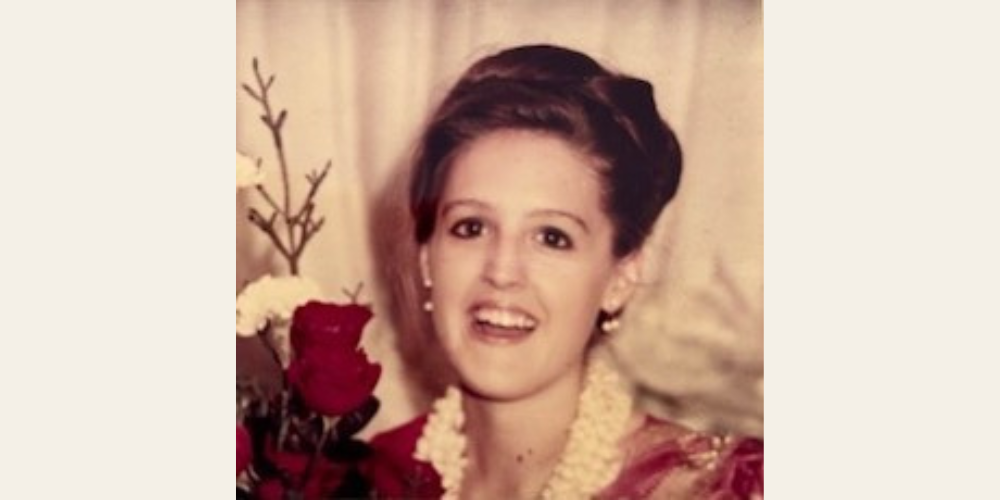
My name is Barbara Southard. I taught history on the college level for many years and published historical studies. Unruly Human Hearts is my first historical novel. I grew up in New York City. My family often spent summers in Vermont, where I loved swimming in lakes and hiking in the beautiful New England forests. When we moved to Hawaii, I was fascinated by the very different tropical beauty, hiking up the mountains formed by volcanoes, swimming in turquoise seas and trying to surf (not very successfully!). When I entered UH as a freshman, I was impressed with the cultural diversity, the mix of Hawaiians and part-Hawaiians, haoles, people of Japanese and Chinese descent, to name only a few. Since I had arrived in Hawai’i only a few months before, I wasn’t acquainted with my classmates. Many years later, when I mentioned to my daughter that I had joined a sorority, she gave me a puzzled look as though to question why her liberal, open-minded mom joined a group based on exclusion not inclusion. But that wasn’t the way it was, I protested. Sororities at UH had previously been based on ethnic groups, but this was a sorority founded by young women of Korean heritage who had decided to open their ranks to all ethnicities. My Jewish roommate, one of the first non-Koreans to join, introduced me to her friends in the sorority who soon became dear friends of mine, opening a multi-cultural world to me.
Is there anyone from UH who has made an impact on your career?
Many professors as well as fellow students helped me decide to major in Asian Studies as an undergraduate, complete a PhD in History with the help of an East-West Center scholarship, and go on to pursue an academic career. Professor Jagdish P. Sharma had a significant role in awakening my interest in Indian history and culture, the subject of my PhD dissertation. He was an inspiring lecturer who also knew how to stimulate interesting class discussions. Professor Rachel Van Meter Baumer encouraged me to study the Bengali language and the progressive social movements of Bengal. During a luncheon with Rachel, I mentioned worries about discrimination against women in the academic world. It was the nineteen sixties and feminist consciousness was on the upswing. Rachel didn’t deny the existence of discrimination, but she insisted that persistence had paid off for her. If I was determined, I could also achieve success. After spending a year in India doing my research, I returned to the East-West Center with the first draft of my dissertation. When the graduate committee asked me to make revisions, I felt discouraged. The chairman of the committee, Burton Stein, insisted that I could make additions that would strengthen not weaken my fundamental argument, and with that encouragement I forged ahead. After earning a PhD in History, I became a professor in the History Department of the University of Puerto Rico and published many academic articles as well as a book about the women’s movement in India.
What was your favorite memory from your time at the East-West Center?
I have so many lovely memories. The multi-cultural experience of my undergraduate years was broadened by the mix of students from all parts of Asia and the United States at the East-West Center. I had friends from both India and Pakistan, two countries that have been involved in multiple conflicts. I met my future husband, who is from India, at a celebration of Pakistan Independence Day on August 14th. It was a gathering with artistic performances that many Indians studying at the East-West Center attended. In later years, when my in-laws asked how we met, it would have been easier for us to say it was a day later, on August 15th (India Independence Day), but we told the truth. When the India- Pakistan War of 1965 broke out, I remember several Pakistani students coming over to join me and some Indian friends at the East-West Center cafeteria. Getting together at one table symbolized rejection of the rhetoric of hate and embrace of the hope that a war between peoples who had shared a common culture for centuries would soon come to an end. My husband and I feel that our stay at the East-West Center prepared us for the time when we were invited to teach at the University of Puerto Rico, which involved learning a new language, and adjusting to an exciting new cultural environment.
Can you explain what your new book Unruly Human Hearts is about?
The novel explores the story behind the famous Beecher-Tilton scandal that culminated in the1875 trial of Henry Ward Beecher, the most famous Christian preacher of the Reconstruction era for adultery with Elizabeth Tilton, the wife of the well-known journalist, Theodore Tilton. Henry and Theodore were close friends and leaders in the abolitionist movement who later campaigned for suffrage for freed slaves and for women. Elizabeth sympathized with their liberal political ideals as well as the gospel of love that Henry preached as an antidote to the Calvinist emphasis on punishment and predestination. When her husband justified his extra-marital affairs in terms of the “free love” doctrine that justified relationships outside of marriage based on true love, Elizabeth found the courage to express her romantic feelings for the reverend. Elizabeth seemed to be a conventional woman of her time, who defined herself as wife and mother, and yet she was accused of holding beliefs and engaging in conduct that challenged the core values of Victorian society. Once the scandal broke, she had to face multiple dilemmas: whether to take a position in favor of her husband or her lover, whether and when to tell the truth, and how to avoid losing everything she valued in her life, including her children.
What inspired you to write a historical fiction about that era?
I began to explore the Beecher-Tilton scandal while teaching a graduate seminar on US history. At first my students didn’t seem interested in the famous 1875 trial, but once I mentioned the scandal had similarities to Bill Clinton’s impeachment for the alleged cover-up of sexual intimacies with Monica Lewinsky, they began to participate actively in the discussion. A young man pointed out that both the president and the reverend survived the scandal. Yeah, said a young woman but what about Monica and Elizabeth? My student’s suggestion that Elizabeth may have fared worse than her male lover inspired me to delve deeper into the sources and I found that many historical studies paint her as a weak personality, a woman who gave in to both her husband and her lover and couldn’t keep her story straight. As I read more about the Victorian code of conduct for women, I suspected that this version of her character was simplistic if not misogynistic. I attempted to come to grips with the challenges Elizabeth faced because of gender inequality in an article for a history journal, but I wasn’t satisfied. I then decided that the best way to do justice to Elizabeth would be to write a novel telling the story of the scandal from her perspective. I found that my own multicultural experiences, dating back to my years at UH, were very helpful, enabling me to imagine how Elizabeth felt in an epoch with values very different from the present day.
What advice would you give to current UH students aspiring to become published authors?
If you wish to write a historical novel, it is important to envision moments in history that are meaningful to you personally, and characters that appeal to you emotionally. Elizabeth’s story fascinated me because my journey to adulthood took place in the 1960s when movements for sexual liberation raised question regarding whether free love (or open marriage) is liberating for women. Many women were still economically dependent on me, which made it difficult for them to insist that men grant their partners the same sexual freedom they claimed for themselves. In an earlier epoch, Elizabeth had to contend not only with financial dependency but also with a more puritanical moral code that frowned on female sexual expression. The MeToo movement that emerged in the early twenty-first century points to the problems implicit in a sexual relationship in which one partner enjoys the advantage of power and position. Elizabeth insisted that her tie with Beecher was based on true love, but her husband saw it as a pastor taking advantage of a deeply loyal member of his flock. On the other hand, Theodore was insensitive to the power dynamic in his marriage to Elizabeth. Hopefully, women in polyamorous relationships today are less likely to undergo the same heartbreak as Elizabeth experienced, because the power dynamics are not as skewed in favor of the male partner as they were in the nineteenth century.
To learn more about Unruly Human Hearts, click here.