
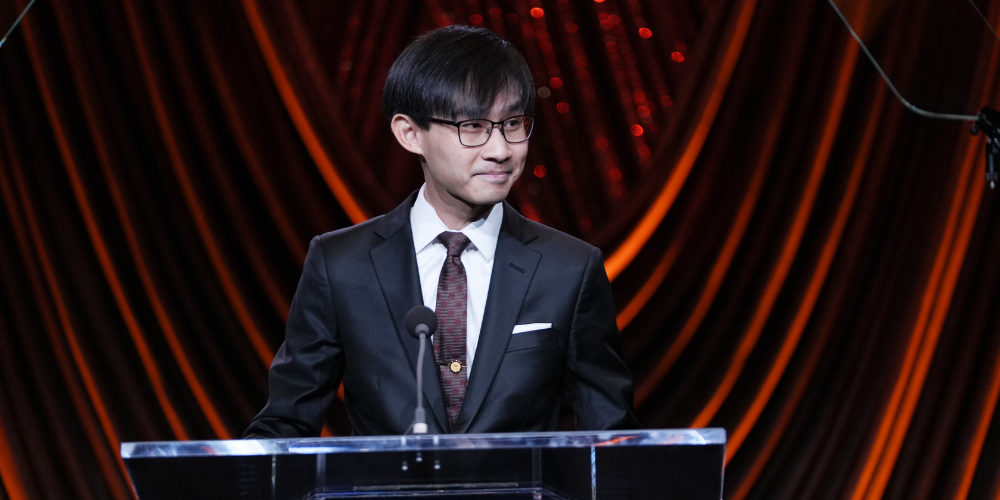
Meet Martin Nguyen, principal at Centre Urban Real Estate
Can you share your journey from Shidler College of Business to your current role as a principal at Centre Urban Real Estate?
It was three days after graduating from the University of Hawai’i that I booked a one-way plane ticket to Los Angeles. No job lined up – I just knew that if I wanted to take the plunge, I had to do it then and I had to go in head-first. I graduated a year early, courtesy of the guidance and resources the Shidler College of Business and the Direct Admit Program provided me. In fact, I was still under 21 and could not celebrate as most graduates would! However, that also meant that I had not graduated with most of my direct peers. Pair that with the prospect of moving to the mainland by myself without a concrete path forward and one could not help but feel a bit lost in the wind.
After arriving in Los Angeles, I had to begin the task of determining what I wanted to do for the foreseeable future. It was quite a difficult process, to be honest. After hundreds of job applications, it was actually a recommendation by a mentor that secured my first full-time job. After seeing a young commercial real estate start-up CEO speak at an event, that aforementioned mentor suggested that I “wait in the lobby” of said start-up and see if I can get face-to-face with a company decision maker. While I was too shy to wait in the lobby, I did call the company and introduced myself as an eager recent graduate of the UH Shidler College of Business. One thing led to another and, about a month after that initial phone call, I was hired as an investment analyst at RealtyMogul, which ultimately became the largest commercial real estate crowdfunding company in the country.
RealtyMogul really was one of the best places for me to be as a recent graduate. It was an innovative investment platform utilizing the relatively new JOBS Act as a way to make private investments into commercial real estate, typically limited to the extremely wealthy and well-connected, accessible to everyday people through crowdfunding. My peers came from various commercial real estate companies and we reported directly to the chief investment officer, who previously ran JPMorgan’s CMBS division. Needless to say, we had operated with institutional investment processes and procedures – the only difference was we were wearing jeans and sneakers as opposed to the typical suit and tie. Being a start-up, that also meant learning many facets of the commercial real estate world. In my time at RealtyMogul, I ultimately underwrote and analyzed over $2.5 billion worth of commercial real estate across the country, ranging from apartment complexes, office buildings, and retail centers to specialized assets such as hotels, student housing, and self-storage. This included various structured finance strategies, including joint venture equity, preferred equity, mezzanine debt, and variations of senior debt.
During my time in Los Angeles, I had slowly become a part of the USC Trojan network, through various friends and mentors, including the mentor who made the fateful recommendation that landed me at RealtyMogul. I became a sort of “adopted Trojan” among my friends and mentors. That is why when I started exploring the idea of going to graduate school, I applied to only one school: USC. You’ll have to forgive me, as I am keenly aware this is for the Shidler Business Magazine! But I was just that adamant that, no matter how many times I had to apply, I was going to be a USC Trojan. I was mentally prepared to receive a flat-out rejection with my first application. After all, by that time I had at that point just about two years of professional experience, which was the bare minimum requirement for the prestigious USC Master of Real Estate Development (MRED) program, which only accepts about 30 applicants each year. Why would they take an island boy with bare minimum requirements working at a start-up? To my utter amazement, a few months later, I opened my inbox to see a congratulatory letter sharing that I was accepted into the USC MRED program. I was going to USC!
During my graduate studies at USC, I had made a reputation for myself as an effective financial analyst. So much so that folks would approach me seeking my guidance on various commercial real estate investment projects. I ended up building quite a robust real estate investment consulting practice. Mind you, this is in addition to having to finish homework, class projects and participate in case study competitions! During this time, there would be very interesting opportunities that would come across my desk. However, these opportunities typically would be too large or complex for a young 20-something to work on himself. Even if I had the self-belief that I could execute on these projects, the commercial real estate industry is notoriously optics driven. And I was aware of what I was and what I was not, no matter how much I wanted to make a run at these opportunities. I had lunch with the aforementioned mentor from earlier to walk through this predicament. I would not have known at the time that that lunch was the beginning of a completely new chapter of my life that will be marked with challenges, successes, and growth.
My mentor had suggested that we start looking at a few of these opportunities together. After a few months of working together, we realized that we very much had complimentary skill sets and experiences, yet the same desire to address the looming housing crisis. We made the ultimate decision to merge our companies together and Centre Urban Real Estate was born. After various evolutions, we now describe Centre Urban as a vertically integrated commercial real estate investment platform focused on future-oriented and impactful properties in core urban areas. We partner with investment decision makers, ranging from family offices to international investment firms, to create value through acquiring and developing cutting-edge commercial real estate, utilizing impact and innovations whenever we can. Since then, Centre Urban has invested, developed and advised on commercial real estate projects in California, the Midwest, and now, I’m happy to share that we acquired our first Hawai’i project in 2024. Moving forward, I truly hope that Centre Urban will be able to play a part, no matter how large or small, in making a positive impact on Hawai’i’s own housing crisis.
Have there been any challenges you’ve faced in your career and if so, how have you overcome them?
My personal journey with Centre Urban has been one marked with ups and downs, as it is with any endeavor or business. Part of this was marked by challenges in identifying a core team that we truly feel confident working with, particularly in an industry as animated as commercial real estate. We concluded that we wanted to live by the mantra of “doing good deals with good people” and not making any exceptions any time red flags present themselves. Navigating the commercial real estate markets and interest rate environment over the past few years certainly was no easy task either, which made the emphasis on a core team even more important. And frankly, it was due to having a great team that is aligned on vision, direction, and trust that we were able to come out of the last few difficult years even stronger than before.
What do you consider to be your greatest successes in your career journey so far?
Out of the challenges of the past few years came a success that really took my journey full circle. I had always wanted to find an opportunity to make a positive impact on Honolulu through the skillset and experience I had gained in my time working and learning on the mainland. I wanted to make a positive contribution to the place I considered home. It took a few years of exploratory research, analysis and partnership discussions but, quite recently, those years of work culminated in the acquisition of Centre Urban’s first workforce housing development project in Honolulu. While we still have a long way to go, we hope that this project will be the catalyst of a long-term, systematic strategy that will allow Centre Urban to help make a dent in Honolulu’s housing and cost of living crisis.
As a graduate of the inaugural Direct Admit Program (DAP) at Shidler, how did this program prepare you for your career in real estate?
My Shidler journey really started well before I ever even set foot on campus, when I received a letter in the mail from the Shidler College of Business congratulating me for being accepted into the “Direct Admit Program” or “DAP”, as it was later known. Given DAP was a new program, I obviously was not able to do any research into the opportunity. No such review existed online and there were no alumni of the program who could vouch for its merits. I decided to attend the first information session and walked away impressed, not just by the amount of preparation and resources the Shidler College of Business was planning on allocating to DAP, but by the quality of students who would eventually become the first DAP cohort and my life-long friends.
What memorable experiences or lessons from your time at Shidler have stayed with you throughout your career?
One of my most memorable experiences actually turned out to be quite a blur! Going into my last year at Shidler, I started diving head-first into real estate courses. I believe I had a 47-credit course load those last two semesters! By the end of that year, I had obtained my real estate salesperson license at 19-years old and was selected for the Alexander & Baldwin Special Student in Real Estate Business Night Award – presented to the top undergraduate student in real estate. The culmination of all that hard work and to have that journey acknowledged certainly is an experience I fondly look back on.
You’ve held leadership roles with numerous organizations and have served on boards. How have these experiences contributed to your personal and professional growth?
I’ve had the opportunity to serve on the leadership boards of various organizations, including serving two terms as Chairperson of the USC Alumni Real Estate Network and currently serving on the Board of Directors of the USC Asian Pacific Alumni Association where I serve as Chairperson of the scholarship committee, which is responsible for awarding scholarship funds to deserving students from a $3 million endowment.
However, one organization that is especially close to my heart is the Center for Tomorrow’s Leaders (CTL), local non-profit organization with a mission to engage, equip, and empower young leaders for Hawaiʻi. I had the privilege of participating in the CTL Fellows program, modeled after the Pacific Century Fellows, when I was in high school. It was that experience that opened my eyes to the possibility that I could also participate as a leader in our community, previously an idea that was completely impossible to me. I was the quiet kid who sat in the back of the class and never raised his hand to ask questions, let alone raise a hand to serve in a leadership position. The experience with CTL showed me that – hey, maybe I could really do this thing. Maybe I could truly be a leader who makes a positive impact in our society. What followed was over a decade of hand raising for leadership roles and opportunities to give back. Following my graduation from the CTL Fellows program and enrolling at the Shidler College of Business, I ran and was elected as the Shidler College of Business’s first freshman Associated Students of the University of Hawaiʻi (ASUH) Senator in decades. I ended up serving three terms as the ASUH Senator for the Shidler College of Business.
This is all to set the background for me to say that, many years later, when CTL asked me to serve in a volunteer leadership position, it was an obvious answer. After all, why would I not want to give back to an organization that gave so much to me? If my support can provide the same experience and support that I received to even just one other person, I know my contribution would have been well worth it. If one starts their volunteerism journey with a positive mindset, regardless of what it is, I truly believe that personal and professional growth will naturally come your way.
What advice do you have for young professionals looking to balance a successful career with community involvement?
I have benefit that my line of work requires community involvement to be successful, however even if that weren’t the case, I would still be doing it. Especially for younger professionals, it provides a sense of fulfilment that not just breaks up the monotony that can be prevalent in one’s early career, but reinforces that regardless of how busy you are, you can always find the time to give back if it is a personal priority.
At one point in the past someone, who was surely also very busy, made the decision to volunteer their time and give back. If their decision had even remotely made a positive impact, then out of respect for that person and their time and contribution, one should make a considerate effort to give back in the same spirit as that person. Then one day, someone who you made a positive impact on will hopefully carry on that spirit for the next generation.
What drives your passion for real estate and community impact, and how do you stay inspired?
The fascinating aspect of commercial real estate is that it is a tangible object that one can physically see, touch, work, play, and live in. Growing up, it was a time when not a lot of real estate development was occurring in Honolulu, likely a result of the hangover from the Japanese asset bubble and subsequent Asian Financial Crisis of the 1990s. However, in the early 2000s, there was a sudden burst of development activity. The empty dirt lot that I had always known as an empty dirt lot was now a residential tower. The run-down warehouse that always looked vacant was now home to exciting new businesses. Those were the result of someone having the foresight, expertise, and vision to make that change in the built environment. Seeing all of this, I asked myself “wouldn’t it be amazing if I could help make that happen one day?”
Fast forward to today, I now have the opportunity to make that impact and I truly feel like I have the best job in the world. Friends sometimes ask me what I want to be doing in three, five, or ten years. My response to them is that, if allowed the privilege, I would love to continue doing what I am currently doing for the rest of my life.